
Introduction
Potassium is an essential mineral and electrolyte, critical for fluid balance, nerve signal transmission, and muscle contractions - including those of the heart. Despite its fundamental role in physiology, the majority of people fall significantly short of the recommended daily intake.
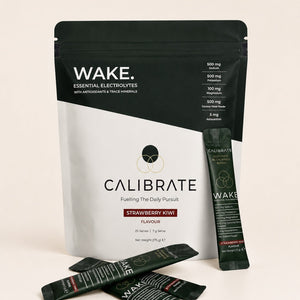
WAKE contains precision-dosed potassium chloride to help close this gap and support optimal hydration at the cellular level.
Impact on Health
The evidence linking potassium to cardiovascular health is robust. A comprehensive meta-analysis published in the British Medical Journal found that higher potassium intake reduces systolic blood pressure by an average of 3.49 mm Hg, and is associated with a 24% reduction in stroke risk (Aburto et al., 2013). A follow-up study in the Journal of the American Heart Association confirmed that adequate potassium intake is strongly associated with lower blood pressure across populations (Filippini et al., 2020).
24% reduction in stroke risk associated with increased potassium intake (Aburto et al., 2013, BMJ)
More recent research links higher potassium intake with reduced all-cause mortality, particularly when paired with lower sodium consumption - confirming the synergistic relationship between these two electrolytes (Gan et al., 2024). Women with high sodium intake who increased potassium consumption showed a particularly significant reduction in cardiovascular risk (Wouda et al., 2022).
Impact on Performance & Hydration
Potassium is the most abundant positively charged ion inside cells. It works in tandem with sodium via the sodium-potassium pump to regulate fluid movement across cell membranes, maintaining osmotic balance and preventing dehydration (Campbell, 2009). Approximately 90% of the body's potassium is found within cells, where it counterbalances sodium and prevents excessive fluid retention (Roumelioti et al., 2018).
For athletes and active individuals, potassium is particularly critical. Beverages with adequate potassium levels improve hydration by maintaining plasma volume and accelerating post-exercise rehydration - directly supporting performance and preventing hypohydration-related fatigue (Perez-Castillo et al., 2024).
Potassium-enriched hydration formulas improve fluid retention and accelerate rehydration following exercise (Perez-Castillo et al., 2024)
Global Intake & The Shortfall
A systematic review spanning 104 studies across 52 countries found that global potassium intake averages just 2.25g per day - well below the WHO guideline of over 3.5g per day. Only 14% of the global population meets this target. Modern western diets, with declining fruit and vegetable consumption alongside rising processed food intake, are the primary driver of this shortfall (Reddin et al., 2023; Weaver, 2013).
Only 14% of the global population meets the WHO recommended potassium intake of 3.5g/day (Reddin et al., 2023)
Dietary Sources
The richest dietary sources of potassium include:
- Dried apricots (1/2 cup) - 755mg
- Lentils, cooked (1 cup) - 731mg
- Baked potato, flesh (1 medium) - 610mg
- Spinach, raw (2 cups) - 334mg
- Salmon, cooked (3oz) - 326mg
- Banana (1 medium) - 422mg
- Greek yogurt, nonfat (6oz) - 240mg
- Coconut water (1 cup) - ~600mg
Note: potassium absorption is reduced by high sodium intake and excessive alcohol or caffeine, both of which increase urinary potassium excretion. This makes electrolyte supplementation particularly relevant for those with high training loads or demanding daily routines.
Conclusion
Potassium is non-negotiable for performance, hydration, and cardiovascular health. The data is clear: the majority of people are deficient. Prioritising potassium-rich dietary sources and supplementing where necessary - as part of a precision electrolyte formula like WAKE - is one of the highest-leverage interventions available for daily health and output.
References
- Aburto et al. (2013). Effect of increased potassium intake on cardiovascular risk factors and disease. BMJ, 346, f1378.
- Filippini et al. (2020). Potassium intake and blood pressure: a dose-response meta-analysis of Randomized Controlled Trials. Journal of the American Heart Association, 9(12).
- Wouda et al. (2022). Sex-specific associations between potassium intake, blood pressure, and cardiovascular outcomes. European Heart Journal, 43(30), 2867-2875.
- Gan et al. (2024). Sex-specific associations between sodium and potassium intake and overall and cause-specific mortality. BMC Medicine, 22, 132.
- Campbell (2009). Physiology of fluid balance. Anaesthesia & Intensive Care Medicine, 10(12), 593-596.
- Roumelioti et al. (2018). Fluid balance concepts in medicine: Principles and practice. World Journal of Nephrology, 7(1), 1-28.
- Perez-Castillo et al. (2024). Compositional aspects of beverages designed to promote hydration before, during, and after exercise. Nutrients, 16(1), 17.
- Reddin et al. (2023). Global mean potassium intake: a systematic review and Bayesian meta-analysis. European Journal of Nutrition, 62(5), 2027-2037.
- Weaver (2013). Potassium and health. Advances in Nutrition, 4(3), 368S-77S.