
Introduction
Sodium is an essential mineral and electrolyte, fundamental to fluid balance, nerve signal transmission, and muscle contractions. It regulates blood pressure and plasma volume, and plays a critical role in hydration by promoting cellular water retention and ensuring nutrients reach their targets.
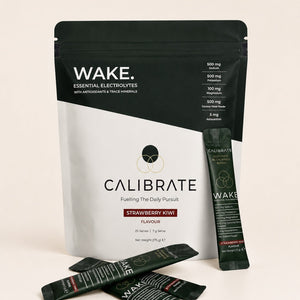
WAKE contains precision-dosed sodium chloride to replace what's lost through sweat and support sustained performance at the cellular level.
Sodium & Cardiovascular Health
The traditional narrative linking sodium to hypertension and cardiovascular disease has been substantially challenged by recent research. A 2024 analysis found that sodium alone is unlikely to be the primary driver of the global hypertension epidemic, and may have minimal impact on blood pressure in otherwise healthy individuals (Gao et al., 2024).
A large-scale meta-analysis found that while very high sodium intake (>5g/day) is associated with increased stroke risk, moderate sodium consumption in the range of 2.3-4.6g per day is not associated with elevated cardiovascular risk for most of the population (O'Donnell et al., 2020; Zhu et al., 2018). Both excessively low and high intakes carry risk - the sweet spot is moderate, balanced consumption (Graudal & Jurgens, 2018).
A moderate sodium intake of 2.3-4.6g/day is not associated with increased cardiovascular risk in the general population (O'Donnell et al., 2020, European Heart Journal)
Critically, it is the ratio of sodium to potassium that matters most. A high sodium-to-potassium ratio is independently associated with increased risk of hypertension, cardiovascular disease, and overall mortality - highlighting that optimising potassium intake alongside sodium is key (Mosallanezhad et al., 2023). This is precisely why WAKE combines both electrolytes in synergistic doses.
Global Intake & Dietary Recommendations
Global average sodium intake is approximately 3,950mg per day - nearly double the WHO's recommended limit of 2,000mg (Thout et al., 2019). Yet context matters: this excess is overwhelmingly driven by processed and packaged foods, which account for over 75% of daily sodium in the modern diet (Magriplis et al., 2011). Primary culprits include bread, cheese, processed cereals, cold cuts, and snack foods.
The practical takeaway: those eating a whole food diet naturally consume less sodium and face fewer associated risks. Simple dietary shifts - reducing processed food, reading labels - can reduce daily sodium intake by 15-20% (Khalesi et al., 2022).
Impact on Performance & Hydration
For active individuals, sodium requirements diverge significantly from general population guidelines. Athletes can lose between 0.5–3g of sodium per hour of intense exercise through sweat - a substantial deficit that water alone cannot address (Veniamakis et al., 2022). Failing to replace these losses risks hyponatremia (dangerously low blood sodium), which impairs performance and poses real health risks (Ranchordas et al., 2017).
Athletes can lose 0.5–3g of sodium per hour during intense exercise - losses that significantly impair performance if not replaced (Veniamakis et al., 2022)
Sodium improves hydration through two mechanisms. First, it directly enhances cellular water retention and helps maintain plasma volume during exercise (Evans et al., 2017; Titze, 2008). Second, it stimulates thirst - ensuring you drink enough to fully restore fluid levels rather than stopping short once plasma volume is superficially replenished (Stachenfeld, 2008). Studies confirm that sodium-containing beverages retain fluid significantly more effectively than plain water (Millard-Stafford et al., 2021). For athletes, the research recommends 300-600mg of sodium per hour of exercise (Veniamakis et al., 2022).
Sodium-containing drinks retain fluid significantly better than plain water, improving post-exercise plasma volume by up to 12.8% vs 6.8% (Shirreffs & Maughan, 1998)
On muscle cramps: electrolyte imbalance, particularly sodium loss, is a primary driver of exercise-associated muscle cramps. Adequate sodium intake alongside proper hydration is among the most effective preventative measures (Miller, 2018).
Dietary Sources
The richest whole food sources of sodium include:
- Table salt (1 tsp) - ~2,300mg
- Smoked salmon (3oz) - ~666mg
- Canned beans (1/2 cup) - ~400mg
- Cottage cheese (1/2 cup) - ~400mg
- Olives (10 large) - ~350mg
- Bread (2 slices) - ~300mg
- Miso (1 tbsp) - ~634mg
Note: processed foods - not the salt shaker - are the dominant source of excess sodium in modern diets. Shifting to whole foods naturally resets your baseline while still leaving room to supplement strategically for performance.
Conclusion
Sodium's reputation as a health villain is outdated. The evidence is clear: moderate sodium intake is not the driver of cardiovascular disease for healthy individuals - and for those with active lifestyles, adequate sodium is non-negotiable for hydration, performance, and muscle function. The priority is optimising the sodium-potassium balance, replacing sweat losses during exercise, and avoiding the hidden sodium overload that comes from processed food - not eliminating sodium from your diet.
References
- Gao (2024). Sodium intake and public health. Research Methods in Medicine & Health Sciences. doi:10.1177/26320843241235586
- Zhu et al. (2018). Association of sodium intake and major cardiovascular outcomes. BMC Cardiovascular Disorders, 18, 192.
- Graudal & Jurgens (2018). Conflicting evidence on health effects associated with salt reduction. Progress in Cardiovascular Diseases, 61(1), 20–26.
- O'Donnell et al. (2020). Salt and cardiovascular disease: insufficient evidence to recommend low sodium intake. European Heart Journal, 41(35), 3363–3373.
- Mosallanezhad et al. (2023). Dietary sodium to potassium ratio is an independent predictor of cardiovascular events. BMC Public Health, 23, 705.
- Thout et al. (2019). The Science of Salt: global estimates of salt intake. Journal of Clinical Hypertension, 21(6), 710–721.
- Magriplis et al. (2011). High sodium intake of children through hidden food sources. Journal of Hypertension, 29(6), 1069–1076.
- Khalesi et al. (2022). Reducing salt intake: a systematic review. Nutrition Reviews, 80(4), 723–740.
- Veniamakis et al. (2022). Effects of Sodium Intake on Health and Performance in Endurance Sports. International Journal of Environmental Research and Public Health, 19(6), 3651.
- Ranchordas et al. (2017). Normative data on regional sweat-sodium concentrations. Journal of the International Society of Sports Nutrition, 14, 40.
- Evans et al. (2017). A Sodium Drink Enhances Fluid Retention Post-Exercise. International Journal of Sport Nutrition and Exercise Metabolism, 27(4), 344–350.
- Titze (2008). Water-free Na+ retention. Blood Purification, 26(1), 95–99.
- Shirreffs & Maughan (1998). Volume repletion after exercise-induced depletion. American Journal of Physiology, 274(5).
- Stachenfeld (2008). Acute effects of sodium ingestion on thirst and cardiovascular function. Current Sports Medicine Reports, 7(4 Suppl), S7–S13.
- Millard-Stafford et al. (2021). The Beverage Hydration Index: Influence of Electrolytes. Nutrients, 13(9), 2933.
- Miller (2018). The Evolution of Exercise-Associated Muscle Cramp Research. ACSM's Health & Fitness Journal, 22(4), 6–8.